Excalidraw is an open-source, web-based virtual whiteboard and diagramming application. It is used to create diagrams, wireframes, and sketches within a web browser without requiring account registration. The software features a characteristic hand-drawn visual style and supports real-time multi-user collaboration using client-side end-to-end encryption. Excalidraw is released under the MIT License and is maintained by Excalidraw s.r.o., a company based in Brno, Czech Republic. == History == Excalidraw was created on 1 January 2020 by Christopher Chedeau, a software engineer at Meta Platforms. Chedeau, who previously co-created React Native and Prettier, initially developed the application as a personal project before registering the domain on 3 January 2020. Within its first months, the project attracted open-source contributors who assisted in expanding its features and rewriting the codebase into TypeScript and React. By early 2021, day-to-day operations moved to Czech developers David Luzar and Milos Vetesnik. In May 2021, the team incorporated Excalidraw s.r.o. in Brno and launched a commercial cloud-based version named Excalidraw+ to fund the open-source project's development. By May 2026, the main open-source repository on GitHub had accumulated over 123,000 stars. == Features and architecture == The application provides an infinite canvas for geometric shapes, lines, arrows, text, and freehand drawing. Its visual presentation relies on Rough.js, a JavaScript graphics library that alters standard vector paths to mimic irregular, hand-drawn lines. Excalidraw operates as a Progressive web application (PWA), allowing local installation and offline usage, saving data natively to local browser storage. Files use a native, JSON-based extension format (.excalidraw), and canvases can be exported to PNG or SVG formats. Real-time collaboration sessions are executed using Socket.IO via a relay server. Data transmission uses the browser's native Web Cryptography API to achieve end-to-end encryption. A symmetric AES key is generated on the client side and appended to the sharing URL as a fragment identifier (following the # character). Because web browsers do not transmit URL fragments to HTTP servers, the data remains unreadable to the distribution server. == Ecosystem == Excalidraw is distributed as an npm package, allowing third-party developers to embed the whiteboard component directly into external React web applications. Community-developed extensions integrate the application's file format into text editors and note-taking systems, including Visual Studio Code and Obsidian. The platform also has native integrations in commercial platforms such as Notion and HackerRank. == Reception == Google's developer relations team published a technical case study on Excalidraw as a reference implementation for Progressive Web Apps. The analysis highlighted the software's adoption of advanced web platform capabilities, specifically its utilization of the File System Access API and native Clipboard API to replicate desktop software behavior within a web browser environment.
InciWeb
InciWeb is an interagency all-risk incident web information management system provided by the United States Forest Service released in 2004. It was originally developed for wildland fire emergencies, but can be also used for other emergency incidents (natural disasters, such as earthquakes, floods, hurricanes, and tornadoes). == Introduction == It was developed with two primary missions: 1. Provide the public a single source of incident related information 2. Provide a standardized reporting tool for the Public Affairs community Official announcements include evacuations, road closures, news releases, maps, photographs, and basic info and current situation about the incident. Incident information can be accessed by: web browser at https://inciweb.wildfire.gov/ Twitter RSS web feed == Technical == The original application was hosted at the United States Forest Service - Wildland Fire Training and Conference Center, at McClellan Airfield, California, comprising three servers: Database server Administrative server Load balancer for the public content which routes traffic to a pool of eight servers. Web traffic averages 2 million plus hits daily during the fire season with the ability to handle 3.5 million hits. The servers were moved to the National information Technology Center (NITC), Kansas City, Missouri on July 16, 2008, along with the release of version 2.0; the current version is 2.2. == Availability issues == InciWeb was having technical difficulties due to the high volume of Internet users trying to access the site during the September–October 2006 Day Fire and the Summer 2008 California wildfires. == Participating agencies == United States Forest Service Bureau of Land Management Bureau of Indian Affairs Fish and Wildlife Service National Park Service National Oceanic & Atmospheric Administration Department of the Interior Office of Aircraft Services National Association of State Foresters United States Fire Administration These same agencies are also in the National Interagency Fire Center.
Overwatch
Overwatch (abbreviated as OW) is a multimedia franchise centered on a series of multiplayer first-person shooter (FPS) video games developed by Blizzard Entertainment. Overwatch was released in 2016. Overwatch 2 was released in 2022 and the original game was taken offline upon its release, though Blizzard renamed it back to Overwatch in 2026. Overwatch features hero-based combat between two teams of players fighting over various objectives, along with other traditional gameplay modes. Released in 2016, Overwatch lacked a traditional story mode. Instead, Blizzard employed a transmedia storytelling strategy to disseminate lore regarding the game's characters, releasing comics and other literary media, as well as animated media that includes short films. The game enjoyed both critical and commercial success, and garnered a devoted following. The fan community around the franchise has produced a large amount of content including art, cosplay, fan fiction, anime-influenced music videos, Internet memes, and pornography. Blizzard helped launch and promote an esports scene surrounding the game, including an annual Overwatch World Cup, Overwatch League a minor league, and the Overwatch Champions Series which borrowed elements found in traditional American sports leagues. == Gameplay == Both games in the Overwatch series are team-based hero shooters. Players select a hero character from a large roster (52 as of Season 2), divided among three class types. These are: Tanks, who have higher health and generally meant to help protect their teammates from damage, but are larger and easier to hit; Damage, who act as the team's offensive leads; and Support, who heal, provide buffs for teammates, or de-buff the opposing team. Each role also features sub-roles with extra passives. These sub-roles include 'Initiator', 'Stalwart', and 'Bruiser' for Tank. 'Specialist', 'Flanker', 'Recon', and 'Sharpshooter' for Damage. 'Medic', 'Tactician', and 'Survivor' for Support. Players are generally free to change to different heroes while inside their spawn room during the course of a match in response to the current tactics employed by other players. As of the development of Overwatch 2, a standard game features one tank player, two damage players and two support players, a change from having two of each class in its predecessor. Players choose their class before the match, and can only pick characters within that class for the duration of the game. There are different styles of game modes, however, that allow players to choose characters from any class throughout the game. Each hero has a skill kit that includes a primary attack, active skills that require a cooldown period before they can be used again, passive skills that remain active at all times, and an Ultimate skill that can only be used once they fill their Ultimate meter either by damaging opponents, mitigating damage, healing teammates or by passively generating it over time. An update in 2025 saw each hero receive a total of four unique abilities known as perks. Each hero has two minor and two major perks; minor perks consist of smaller changes to a hero's kit, while major perks are intended to affect the match more significantly. At the beginning of each match, all heroes are set to level 1 for each player. As the match progresses, players can individually level up their respective heroes, minor perks are unlocked at level 2, and major perks are unlocked at the maximum level 3. When perks become available, players may only select one of each type of perk; a selected perk becomes irreversibly attached to the current hero for the remainder of the match. If a player switches to another hero mid-match, the previously selected hero retains their level and perk progress. Game types of Overwatch are split between standard matches, competitive play, custom games, and arcade modes. Standard matches have matchmaking based loosely on the player's skill level as measured by the game. Competitive mode uses more strict matchmaking based on a player's current rank on the competitive ladder, with their rank increasing or decreasing when they win or lose a game, respectively. Arcade modes do not use matchmaking and are generally more experimental modes compared to standard and competitive modes. Custom games are created via the workshop and can be utilised to make game modes that are very different from the base game. The workshop, is the software in Overwatch which creates the game using either presets and settings or rules and conditions made by code. These game modes can be published directly onto Overwatch’s custom browse tab or shared off platform using a 5 digit alphanumeric code. Standard and competitive game modes are randomly selected at the start of each match, and are objective based, requiring teams to control a fixed objective point for a duration of time, or escort a payload to a target zone before match time expires. These modes include: Assault (introduced in Overwatch): Also known as 2 Capture Points (or 2CP), Assault has the attacking team tasked with capturing two target points in sequence on the map, while the defending team must stop them. Assault-style maps were removed from main gameplay rotation after Overwatch 2 released but available in the game's arcade mode. It is still available in the game's custom game modes. Since Season 2, Assault-style maps are available in Arcade Mode daily routines. Escort (introduced in Overwatch): Also known as "Payload" by the community, The attacking team is tasked with escorting a payload to a certain delivery point before time runs out, while the defending team must stop them. The payload vehicle moves along a fixed track when any player on the attacking team is close to it, increasing in speed if multiple attackers are present, the increase capping at 3, but will stop if a defending player is nearby; should no attacker be near the vehicle, it will start to move backwards along the track. The payload will also heal any attacking players by 10 health per second while they are near the payload. Passing specific checkpoints will extend the match time and prevent the payload from moving backwards from that point. Hybrid (Assault/Escort) (introduced in Overwatch): The attacking team has to capture the payload (as if it were a target point from Assault) and escort it to its destination, while the defending team tries to hold them back. Control (introduced in Overwatch): Each team tries to capture and maintain a common control point until their capture percentage reaches 100%. This game mode is played in a best-of-three format. Control maps are laid out in a symmetric fashion so no team has an intrinsic position advantage. Push (introduced in Overwatch 2's launch): Each team attempts to secure control of a large robot that pushes one of two barriers to the opposing team's side of the map, whilst being escorted by at least one team member, stopping when enemy players are nearby, similar to the payload movement system in Escort. The team that pushes the payload fully to the other side, or furthest into the enemy territory before the time runs out, wins the match. Flashpoint (introduced in Overwatch 2 in 2023): Similar to Control, each team attempts to capture and maintain a common control point until their capture percentage reaches 100%. This game mode takes place on significantly larger maps with five separate control points, which take a shorter amount of time to capture as compared to a standard Control map. A central control point is always activated first; after it is secured by one team, the remaining four are activated in a random order. The first team to secure three control points wins. Clash (introduced in Overwatch 2 in 2024): Clash maps feature symmetrical maps with five control points. Teams initially vie for control of the central point, with the winning team progressing to the next control point, towards the opponent's base. Opponents can push back by winning control points and shifting the next point away from their base. If a team captures the point closest to the opponent's base, they win. Otherwise the match plays out until one team wins control five times. Arcade modes may include variations of the above modes with experimental rules, and can also include modes like Deathmatch and Capture the Flag. Other common arcade modes include: Elimination (introduced in Overwatch in 2016): Two teams face off in a series of rounds, attempting to wipe out the other team; once a player is killed they remain out of the game until the next round, though they can be revived by Mercy's 'Resurrect' ability. If no team has won a round by a certain time, then the winners are decided by the team that can first take a neutral control point. Players cannot change heroes until the next round. Some of these can be played in "lockout" mode, in which the heroes selected by the winning team for a round are "locked" and cannot be selected in future rounds. Total Mayhem (i
Residuated Boolean algebra
In mathematics, a residuated Boolean algebra is a residuated lattice whose lattice structure is that of a Boolean algebra. Examples include Boolean algebras with the monoid taken to be conjunction, the set of all formal languages over a given alphabet Σ {\displaystyle \Sigma } under concatenation, the set of all binary relations on a given set X {\displaystyle X} under relational composition, and more generally the power set of any equivalence relation, again under relational composition. The original application was to relation algebras as a finitely axiomatized generalization of the binary relation example, but there exist interesting examples of residuated Boolean algebras that are not relation algebras, such as the language example. == Definition == A residuated Boolean algebra is an algebraic structure ( L , ∧ , ∨ , ¬ , 0 , 1 , ∙ , I , / , ∖ ) {\displaystyle (L,\wedge ,\vee ,\neg ,0,1,\bullet ,\mathbf {I} ,/,\backslash )} such that An equivalent signature better suited to the relation algebra application is ( L , ∧ , ∨ , ¬ , 0 , 1 , ∙ , I , ▹ , ◃ ) {\displaystyle (L,\wedge ,\vee ,\neg ,0,1,\bullet ,\mathbf {I} ,\triangleright ,\triangleleft )} where the unary operations x ∖ {\displaystyle x\backslash } and x ▹ {\displaystyle x\triangleright } are intertranslatable in the manner of De Morgan's laws via x ∖ y = ¬ ( x ▹ ¬ y ) {\displaystyle x\backslash y=\neg (x\triangleright \neg y)} , x ▹ y = ¬ ( x ∖ ¬ y ) {\displaystyle x\triangleright y=\neg (x\backslash \neg y)} , and dually / y {\displaystyle /y} and ◃ y {\displaystyle \triangleleft y} as x / y = ¬ ( ¬ x ◃ y ) {\displaystyle x/y=\neg (\neg x\triangleleft y)} , x ◃ y = ¬ ( ¬ x / y ) {\displaystyle x\triangleleft y=\neg (\neg x/y)} , with the residuation axioms in the residuated lattice article reorganized accordingly (replacing z {\displaystyle z} by ¬ z {\displaystyle \neg z} ) to read ( x ▹ z ) ∧ y = 0 ⇔ ( x ∙ y ) ∧ z = 0 ⇔ ( z ◃ y ) ∧ x = 0 {\displaystyle (x\triangleright z)\wedge y=0\ \Leftrightarrow \ (x\bullet y)\wedge z=0\ \Leftrightarrow \ (z\triangleleft y)\wedge x=0} This De Morgan dual reformulation is motivated and discussed in more detail in the section below on conjugacy. Since residuated lattices and Boolean algebras are each definable with finitely many equations, so are residuated Boolean algebras, whence they form a finitely axiomatizable variety. == Examples == Any Boolean algebra, with the monoid multiplication ∙ {\displaystyle \bullet } taken to be conjunction and both residuals taken to be material implication x → y {\displaystyle x\to y} . Of the remaining 15 binary Boolean operations that might be considered in place of conjunction for the monoid multiplication, only five meet the monotonicity requirement, namely 0 , 1 , x , y {\displaystyle 0,1,x,y} and x ∨ y {\displaystyle x\vee y} . Setting y = z = 0 {\displaystyle y=z=0} in the residuation axiom y ≤ x ∖ z ⇔ x ∙ y ≤ z {\displaystyle y\leq x\backslash z\ \Leftrightarrow \ x\bullet y\leq z} , we have 0 ≤ x ∖ 0 ⇔ x ∙ 0 ≤ 0 {\displaystyle 0\leq x\backslash 0\ \Leftrightarrow \ x\bullet 0\leq 0} , which is falsified by taking x = 1 {\displaystyle x=1} when x ∙ y = 1 {\displaystyle x\bullet y=1} , x {\displaystyle x} , or x ∨ y {\displaystyle x\vee y} . The dual argument for z / y {\displaystyle z/y} rules out x ∙ y = y {\displaystyle x\bullet y=y} . This just leaves x ∙ y = 0 {\displaystyle x\bullet y=0} (a constant binary operation independent of x {\displaystyle x} and y {\displaystyle y} ), which satisfies almost all the axioms when the residuals are both taken to be the constant operation x / y = x ∖ y = 1 {\displaystyle x/y=x\backslash y=1} . The axiom it fails is x ∙ I = x = I ∙ x {\displaystyle x\bullet \mathbf {I} =x=\mathbf {I} \bullet x} , for want of a suitable value for I {\displaystyle \mathbf {I} } . Hence conjunction is the only binary Boolean operation making the monoid multiplication that of a residuated Boolean algebra. The power set 2 X 2 {\displaystyle 2^{X^{2}}} made a Boolean algebra as usual with ∩ {\displaystyle \cap } , ∪ {\displaystyle \cup } and complement relative to X 2 {\displaystyle X^{2}} , and made a monoid with relational composition. The monoid unit I {\displaystyle \mathbf {I} } is the identity relation { ( x , x ) | x ∈ X } {\displaystyle \{(x,x)|x\in X\}} . The right residual R ∖ S {\displaystyle R\backslash S} is defined by x ( R ∖ S ) y ⇔ ∀ z ∈ X , z R x ⇒ z S y {\displaystyle x(R\backslash S)y\ \Leftrightarrow \ \forall z\in X,zRx\Rightarrow zSy} . Dually the left residual S / R {\displaystyle S/R} is defined by y ( S / R ) x ⇔ ∀ z ∈ X , x R z ⇒ y S z {\displaystyle y(S/R)x\ \Leftrightarrow \ \forall z\in X,xRz\Rightarrow ySz} . The power set 2 Σ ∗ {\displaystyle 2^{\Sigma ^{}}} made a Boolean algebra as for Example 2, but with language concatenation for the monoid. Here the set Σ {\displaystyle \Sigma } is used as an alphabet while Σ ∗ {\displaystyle \Sigma ^{}} denotes the set of all finite (including empty) words over that alphabet. The concatenation L M {\displaystyle LM} of languages L {\displaystyle L} and M {\displaystyle M} consists of all words u v {\displaystyle uv} such that u ∈ L {\displaystyle u\in L} and v ∈ M {\displaystyle v\in M} . The monoid unit is the language { ε } {\displaystyle \{\varepsilon \}} consisting of just the empty word ε {\displaystyle \varepsilon } . The right residual M ∖ L {\displaystyle M\backslash L} consists of all words w {\displaystyle w} over Σ {\displaystyle \Sigma } such that M w ⊆ L {\displaystyle Mw\subseteq L} . The left residual L / M {\displaystyle L/M} is the same with w M {\displaystyle wM} in place of M w {\displaystyle Mw} . == Conjugacy == The De Morgan duals ▹ {\displaystyle \triangleright } and ◃ {\displaystyle \triangleleft } of residuation arise as follows. Among residuated lattices, Boolean algebras are special by virtue of having a complementation operation ¬ {\displaystyle \neg } . This permits an alternative expression of the three inequalities y ≤ x ∖ z ⇔ x ∙ y ≤ z ⇔ x ≤ z / y {\displaystyle y\leq x\backslash z\ \Leftrightarrow \ x\bullet y\leq z\ \Leftrightarrow \ x\leq z/y} in the axiomatization of the two residuals in terms of disjointness, via the equivalence x ≤ y ⇔ x ∧ ¬ y = 0 {\displaystyle x\leq y\ \Leftrightarrow \ x\wedge \neg y=0} . Abbreviating x ∧ y = 0 {\displaystyle x\wedge y=0} to x # y {\displaystyle x\#y} as the expression of their disjointness, and substituting ¬ z {\displaystyle \neg z} for z {\displaystyle z} in the axioms, they become with a little Boolean manipulation ¬ ( x ∖ ¬ z ) # y ⇔ x ∙ y # z ⇔ ¬ ( ¬ z / y ) # x {\displaystyle \neg (x\backslash \neg z)\#y\ \Leftrightarrow \ x\bullet y\#z\ \Leftrightarrow \ \neg (\neg z/y)\#x} Now ¬ ( x ∖ ¬ z ) {\displaystyle \neg (x\backslash \neg z)} is reminiscent of De Morgan duality, suggesting that x ∖ {\displaystyle x\backslash } be thought of as a unary operation f {\displaystyle f} , defined by f ( y ) = x ∖ y {\displaystyle f(y)=x\backslash y} , that has a De Morgan dual ¬ f ( ¬ y ) {\displaystyle \neg f(\neg y)} , analogous to ∀ x ϕ ( x ) = ¬ ∃ x ¬ ϕ ( x ) {\displaystyle \forall x\phi (x)=\neg \exists x\neg \phi (x)} . Denoting this dual operation as x ▹ {\displaystyle x\triangleright } , we define x ▹ z {\displaystyle x\triangleright z} as ¬ x ∖ ¬ z {\displaystyle \neg x\backslash \neg z} . Similarly we define another operation z ◃ y {\displaystyle z\triangleleft y} as ¬ ( ¬ z / y ) {\displaystyle \neg (\neg z/y)} . By analogy with x ∖ {\displaystyle x\backslash } as the residual operation associated with the operation x ∙ {\displaystyle x\bullet } , we refer to x ▹ {\displaystyle x\triangleright } as the conjugate operation, or simply conjugate, of x ∙ {\displaystyle x\bullet } . Likewise ◃ y {\displaystyle \triangleleft y} is the conjugate of ∙ y {\displaystyle \bullet y} . Unlike residuals, conjugacy is an equivalence relation between operations: if f {\displaystyle f} is the conjugate of g {\displaystyle g} then g {\displaystyle g} is also the conjugate of f {\displaystyle f} , i.e. the conjugate of the conjugate of f {\displaystyle f} is f {\displaystyle f} . Another advantage of conjugacy is that it becomes unnecessary to speak of right and left conjugates, that distinction now being inherited from the difference between x ∙ {\displaystyle x\bullet } and ∙ x {\displaystyle \bullet x} , which have as their respective conjugates x ▹ {\displaystyle x\triangleright } and ◃ x {\displaystyle \triangleleft x} . (But this advantage accrues also to residuals when x ∖ {\displaystyle x\backslash } is taken to be the residual operation to x ∙ {\displaystyle x\bullet } .) All this yields (along with the Boolean algebra and monoid axioms) the following equivalent axiomatization of a residuated Boolean algebra. y # x ▹ z ⇔ x ∙ y # z ⇔ x # z ◃ y {\displaystyle y\#x\triangleright z\ \Leftrightarrow \ x\bullet y\#z\ \Leftrightarrow \ x\#z\triangleleft y} With this signature it remains the case that this axiomatization can be expressed as
Polyworld
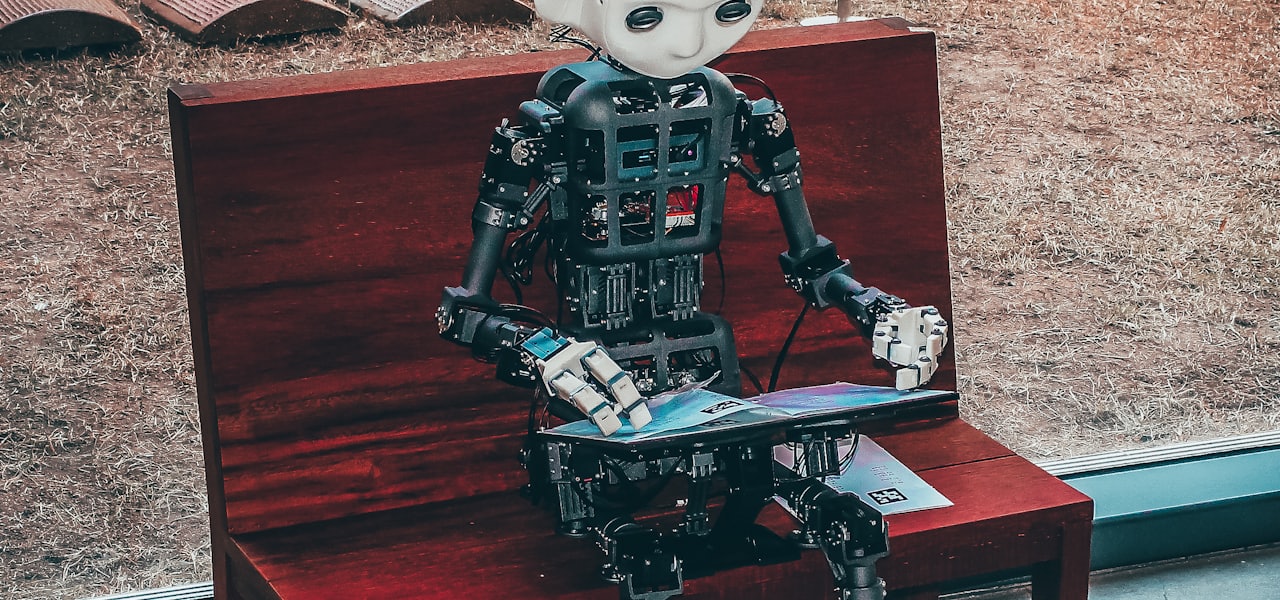
Polyworld is a cross-platform (Linux, Mac OS X) program written by Larry Yaeger to evolve Artificial Intelligence through natural selection and evolutionary algorithms. It uses the Qt graphics toolkit and OpenGL to display a graphical environment in which a population of trapezoid agents search for food, mate, have offspring, and prey on each other. The population is typically only in the hundreds, as each individual is rather complex and the environment consumes considerable computer resources. The graphical environment is necessary since the individuals actually move around the 2-D plane and must be able to "see." Since some basic abilities, like eating carcasses or randomly generated food, seeing other individuals, mating or fighting with them, etc., are possible, a number of interesting behaviours have been observed to spontaneously arise after prolonged evolution, such as cannibalism, predators and prey, and mimicry. Each individual makes decisions based on a neural net using Hebbian learning; the neural net is derived from each individual's genome. The genome does not merely specify the wiring of the neural nets, but also determines their size, speed, color, mutation rate and a number of other factors. The genome is randomly mutated at a set probability, which are also changed in descendant organisms.
Cobocards
CoboCards is a web application for creation, study and sharing of flashcards. They also provide mobile application for Android and iOS mobile devices, to help study of flashcards on the move. Based on the freemium model, CoboCards provides users a free account with two card sets compared to paid subscription with premium features such as unlimited card sets, Leitner system based trainer and collaborative learning. == History == CoboCards is a project of Jamil Soufan and Tamim Swaid. Tamim Swaid has developed the concept and interface of a collaboratively usable e-learning platform in his diploma thesis at the University of Applied Sciences in February 2007. In January 2010 they founded the CoboCards GmbH (limited company) together with Ali Yildirim. CoboCards is supported by its strategic partners Prof. Schroeder (RWTH Aachen University), Prof. Oliver Wrede (University for Applied Sciences Aachen) and Prof. Klaus Gasteier (University of Arts Berlin). With the idea of creating and studying flashcards online and offering an active control of learning progress they won the start2grow business idea competition in September 2009 (€25.000 ). Additionally CoboCards was funded by German Authorities with approximately €100.000 .
Smart speaker
A smart speaker is a type of loudspeaker and voice command device with an integrated virtual assistant that offers interactive actions and hands-free activation with the help of one "wake word" (or several "wake words"). Some smart speakers also act as smart home hubs by using Wi-Fi, Bluetooth, Thread, and other protocol standards to extend usage beyond audio playback and control home automation devices connected through a local area network. == History == Early voice-activated devices began in 2013 with MIT's Jasper project, which used multiple microphones and cloud software to power hands-free interactions from across a room. The first commercial smart speaker was the Amazon Echo, which was released in 2014 powered by Alexa and a ring of far-field microphones. Google followed in 2016 with Home, powered by Google Assistant. By 2017, devices like the Echo Show and Home Hub (later called Nest Hub) added touchscreens and video, creating the "smart display" subcategory. In 2018, Apple joined the smart speaker trend by launching the HomePod, which focused on high-quality audio alongside their built-in assistant Siri. ASUS release its own smart Speaker Xiao-Bu in 2019 with Artificial Intelligence, it terminates the Cloud Service on June 1st, 2025, which means all real-time service such as weather, news, currency conversion is affected. Sonos's 1st smart speaker Sonos One released in 2017, powered by Alexa. Invoke by Harman Kardon was powered by Microsoft's intelligent personal assistant, Cortana. In the early 2020s, smart speakers gained on-device voice processing for faster responses and improved privacy. New standards such as Matter and Thread allowed multitudes of smart-home devices (even from completely different brands) to work together. == Features == === Audio and Voice === Smart speakers use multiple microphones along with noise-cancelling software to pick up your voice from across the room, even when music is playing or the assistant is already talking. Noise suppression and echo cancellation is also used by the speaker so it can focus in on who is talking and ignore any background noises. Most smart speaker models can recognize who is speaking by voiceprint, which allows the speaker to grab information from that person's calendar, preferences, or music playlists. Listening to music on a speaker is when importance for good audio quality becomes apparent. Entry-level (cheaper) speakers such as the Home Mini or the Echo Dot have a single full-range driver. These lower-end speakers typically aren't great for listening to music as the audio quality is pretty poor. More advanced units such as the Home Max or Echo Studio have separate tweeters and woofers meant for listening to music in high quality. === Connectivity and smart-home control === Most connect over Wi-Fi or Bluetooth and support hub protocols like Thread and Matter. That lets them not only stream and play music but also allows you to control various brands of smart lights, thermostats, door locks, cameras, and much more-all from one point of control. Each can have its own designated interface and features in-house, usually launched or controlled via application or home automation software. These devices are able to communicate with each other via peer-to-peer connection through mesh networking. These speakers and related smart devices are typically controlled with one smartphone application. === Assistant services and skills === The built-in assistants handle timers, alarms, reminders, news briefings, weather updates, send messages to other smart devices, send texts, make calls, and simple questions. You can combine actions together in what are typically known as routines (for example saying "good morning" turns on lights, starts the coffee, says the weather, and reads the news) and add extra functions known as skills or actions (for things like ordering food or playing trivia games). This hands-free use of smart speakers can help assist those with disabilities. Most other technologies need the user to be able to physically interact with the device. Smart speakers are not bound by these limitations and can serve as an excellent tool for those who are unable to use their arms or legs or have vision issues. Although these tasks can be completed by a phone or computer, consumers tend to lean towards smart speakers due to factors such as their range being much greater than that of a phone and the need to not have to physically interact with the speaker to get the voice assistant as with most smartphones, certain parts of a phone may need to be interacted with to activate the speaking assistant. === Smart displays === Some smart speakers also include a screen to show the user a visual response. A smart speaker with a touchscreen is known as a smart display; these integrate a conversational user interface with display screens to augment voice interaction with images and video. They are powered by one of the common voice assistants and offer additional controls for smart home devices, feature streaming apps, and web browsers with touch controls for selecting content. The first smart displays were introduced in 2017 by Amazon (Amazon Echo Show) and Google (Google/Nest Home Hub). Hotel chain Marriott International partnered with Amazon to install Echo devices in select hotels since 2018. A Taiwanese startup, Aiello, launched the Aiello Voice Assistant (AVA) in the Asian hotel market in 2019, claiming it is powered by a multi-AI model system. Angie by Nomadix, which is similar to the Amazon Echo, launched its first product in 2017, specifically targeting hotel properties in the North America. In May 2019, Angie Hospitality acquired the assets of Roxy, a competitor that also built its own speech-enabled virtual assistant technology for hotels. This acquisition merged two proprietary NLP stacks into the current Nomadix product. === Artificial intelligence === The newest speakers can use on-device AI or cloud-based generative models to allow the smart speaker to carry on much more natural conversations, draft emails or recipes, suggest ideas based on context, or even create short pieces of music or art. This AI evolution allows these speakers to do far more than what they could do before. == Accuracy == According to a study by Proceedings of the National Academy of Sciences of the United States of America released In March 2020, the six biggest tech development companies, Amazon, Apple, Google, Yandex, IBM and Microsoft, have misidentified more words spoken by "black people" than "white people". The systems tested errors and unreadability, with a 19 and 35 percent discrepancy for the former and a 2 and 20 percent discrepancy for the latter. The North American Chapter of the Association for Computational Linguistics (NAACL) also identified a discrepancy between male and female voices. According to their research, Google's speech recognition software is 13 percent more accurate for men than women. It performs better than the systems used by Bing, AT&T, and IBM. == Privacy concerns == The built-in microphone in smart speakers is continuously listening for wake words followed by a command. However, these continuously listening microphones also raise privacy concerns among users. According to a survey taken by 1,007 people in Western Europe, it is clear that privacy is the biggest concern holding consumers back from buying "smart" products. these concerns include what is being recorded, how the data will be used, how it will be protected, and whether it will be used for invasive advertising. Furthermore, an analysis of Amazon Echo Dots showed that 30–38% of "spurious audio recordings were human conversations", suggesting that these devices capture audio other than strictly detection of the wake word. === As a wiretap === There are strong concerns that the ever-listening microphone of smart speakers presents a perfect candidate for wiretapping. In 2017, British security researcher Mark Barnes showed that pre-2017 Echos have exposed pins which allow for a compromised OS to be booted. According to Umar Iqbal, an assistant professor at Washington University in St. Louis, research indicates that data from consumer interactions with Alexa was used to targeted advertisements and products to consumer with over 40% of transmitted data lacking proper encryption raising privacy concerns. Further data indicates that due to the Smart Speakers ability to always capture audio, it begins to pick up on external conversations from consumers not related to commands given to the smart speaker. Things such as other members in the household, consumers on the phone and even TV audio can be picked up by these speakers and stored for future use by companies. === Voice assistance vs privacy === While voice assistants provide a valuable service, there can be some hesitation towards using them in various social contexts, such as in public or around other users. However, only more recently have users begun interac