The BFR algorithm, named after its inventors Bradley, Fayyad and Reina, is a variant of k-means algorithm that is designed to cluster data in a high-dimensional Euclidean space. It makes a very strong assumption about the shape of clusters: they must be normally distributed about a centroid. The mean and standard deviation for a cluster may differ for different dimensions, but the dimensions must be independent. In other words, the data must take the shape of axis-aligned ellipses.
GeneRIF
A GeneRIF or Gene Reference Into Function is a short (255 characters or fewer) statement about the function of a gene. GeneRIFs provide a simple mechanism for allowing scientists to add to the functional annotation of genes described in the Entrez Gene database. In practice, function is constructed quite broadly. For example, there are GeneRIFs that discuss the role of a gene in a disease, GeneRIFs that point the viewer towards a review article about the gene, and GeneRIFs that discuss the structure of a gene. However, the stated intent is for GeneRIFs to be about gene function. Currently over half a million geneRIFs have been created for genes from almost 1000 different species. GeneRIFs are always associated with specific entries in the Entrez Gene database. Each GeneRIF has a pointer to the PubMed ID (a type of document identifier) of a scientific publication that provides evidence for the statement made by the GeneRIF. GeneRIFs are often extracted directly from the document that is identified by the PubMed ID, very frequently from its title or from its final sentence. GeneRIFs are usually produced by NCBI indexers, but anyone may submit a GeneRIF. To be processed, a valid Gene ID must exist for the specific gene, or the Gene staff must have assigned an overall Gene ID to the species. The latter case is implemented via records in Gene with the symbol NEWENTRY. Once the Gene ID is identified, only three types of information are required to complete a submission: a concise phrase describing a function or functions (less than 255 characters in length, preferably more than a restatement of the title of the paper); a published paper describing that function, implemented by supplying the PubMed ID of a citation in PubMed; a valid e-mail address (which will remain confidential). == Example == Here are some GeneRIFs taken from Entrez Gene for GeneID 7157, the human gene TP53. The PubMed document identifiers have been omitted from the examples. Note the wide variability with respect to the presence or absence of punctuation and of sentence-initial capital letters. p53 and c-erbB-2 may have independent role in carcinogenesis of gall bladder cancer Degradation of endogenous HIPK2 depends on the presence of a functional p53 protein. p53 codon 72 alleles influence the response to anticancer drugs in cells from aged people by regulating the cell cycle inhibitor p21WAF1 Logistic regression analysis showed p53 and COX-2 as dependent predictors in pancreatic carcinogenesis, and a reciprocal relationship to neoplastic progression between p53 and COX-2. GeneRIFs are an unusual type of textual genre, and they have recently been the subject of a number of articles from the natural language processing community.
Imix video cube
The Imix (also known as ImMix) Video Cube is one of the first computer non-linear editing systems that was a full broadcast quality online video finishing machine. After its release in 1994, Imix released a more advanced version, the Imix Turbo Cube, which boasted 4 channels of real time layered visual effects. It was a hardware computer system controlled by an Apple Macintosh computer.
Perceptual robotics
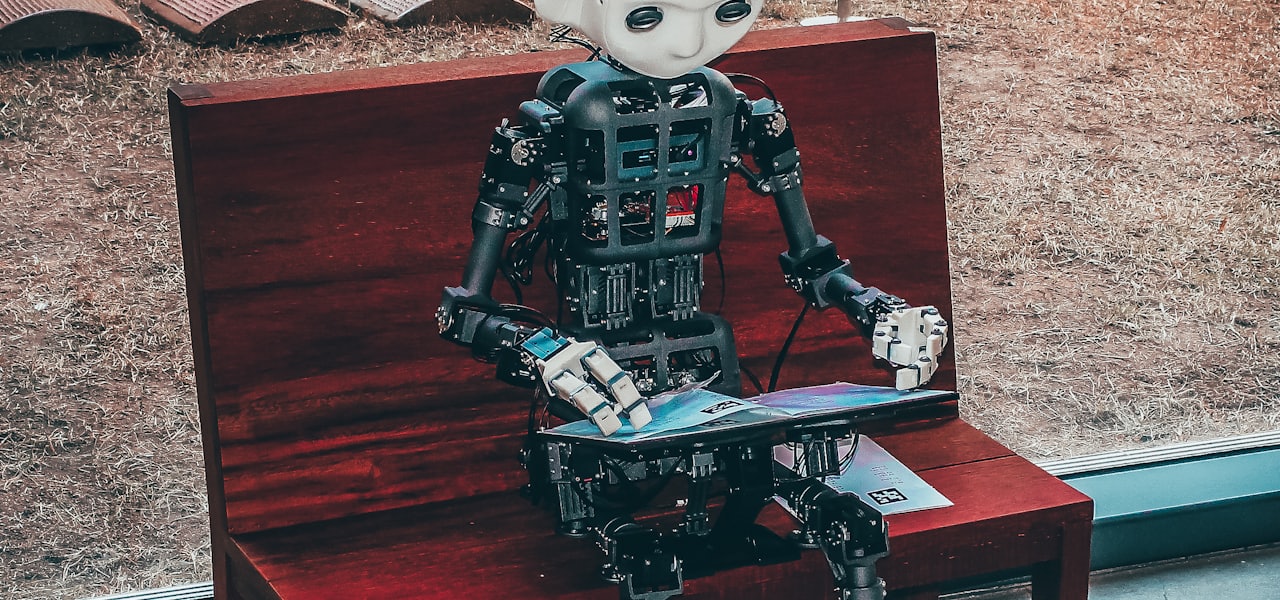
Perceptual robotics is an interdisciplinary science linking Robotics and Neuroscience. It investigates biologically motivated robot control strategies, concentrating on perceptual rather than cognitive processes and thereby sides with J. J. Gibson's view against the Poverty of the stimulus theory. As a working definition, the following quote from Chapter 64 by H. Bülthoff, C. Wallraven and M. Giese from The Springer Handbook of Robotics, edited by Bruno Siciliano and Oussama Khatib, published by Springer in 2007, could be used: In the following we will apply the term Perceptual Robotics to signify the design of robots based on principles that are derived from human perception on all three levels in the sense of Marr. This includes a realization in terms of specific neural circuits as well as the transfer of more abstract biologically-inspired strategies for the solution of relevant computational problems.
Conduit (company)
Conduit Ltd. is an international software company. From its founding in 2005 to 2013, its most well-known product was the Conduit toolbar, which was widely-described as malware. In 2013, it spun off its toolbar business; today, its main product is a mobile development platform that allows users to create native and web mobile applications for smartphones. == Products == From 2005 to 2013, the company's most well-known product was the Conduit toolbar, which is flagged by most antivirus software as potentially unwanted and adware. Conduit's toolbar software is often downloaded by malware packages from other publishers. The company spun off the toolbar division that manages the Conduit toolbar in 2013. Today, the company's main product is a mobile development platform that allows users to create native and web mobile applications for smartphones. App creation for its App Gallery is free, but it charges a monthly subscription fee to place apps on the App Store or Google Play. == History == Conduit was founded in 2005 by Shilo, Dror Erez, and Gaby Bilcyzk. Between years 2005 and 2013, it ran a successful but controversial toolbar platform business. Conduit was part of the so-called Download Valley companies monetizing free software and downloads by bundling adware. The toolbars were criticized by some as being very difficult to uninstall. The toolbar software was referred to as a "potentially unwanted program" by some in the computer industry because it could be used to change browser settings. The company had more than 400 employees in 2013. In September same year, Conduit spun off its entire website toolbar business division, which combined with Perion Network. After the deal, Conduit shareholders owned 81% of Perion's existing shares and both Perion and Conduit remained independent companies. The substantial size of the Conduit user base allowed Perion to immediately surpass AOL in U.S. searches. In 2015, Conduit announced it would purchase Keeprz, a mobile customer loyalty platform, for $45 million.
Dropbox Carousel
Dropbox Carousel was a photo and video management app offered by Dropbox. The third-party native app, available on Android and iOS, allowed users to store, manage, and organize photos. Photos were organized by date, time and event and backed up on Dropbox. It competed in this space against other online photo storage services such as Google's Google Photos, Apple's iCloud, and Yahoo's Flickr. Chris Lee, Dropbox's head of product development for Carousel described the app as an add-on to Dropbox, a “dedicated experience for photos and videos” and a space for “reliving personal memories”. == History == Mailbox founder, Gentry Underwood unveiled Carousel at a gathering in San Francisco on April 9, 2014. Much of the features in Carousel come from Snapjoy, a photo start-up, that Dropbox acquired on December 19, 2012. When Carousel was launched, it marked amongst many others, a series of acquisitions made by Dropbox to prep up before opening its stock for public offering. The acquisitions would help demonstrate its expansive product offerings pitching potential profitability to investors. In December 2015, Dropbox announced that Carousel would be shut down and some Carousel features would be integrated into the primary Dropbox application. On March 31, 2016, Carousel was deactivated. == Features == Carousel prompted users to free local storage once it had synced and backed-up local photos to the cloud. Flashback was a feature (enabled by default) that showed past photos or videos taken the same day, a year, or some years back. Flashback used an algorithm designed to identify human faces - resulting in greater likelihood of the user's picture or people in the user's close circle appearing. A scrollable timeline, which was earlier a scroll wheel, at the bottom let the user scroll to photo(s) at a specific date with a finger swipe.
Super-resolution optical fluctuation imaging
Super-resolution optical fluctuation imaging (SOFI) is a post-processing method for the calculation of super-resolved images from recorded image time series that is based on the temporal correlations of independently fluctuating fluorescent emitters. SOFI has been developed for super-resolution of biological specimen that are labelled with independently fluctuating fluorescent emitters (organic dyes, fluorescent proteins). In comparison to other super-resolution microscopy techniques such as STORM or PALM that rely on single-molecule localization and hence only allow one active molecule per diffraction-limited area (DLA) and timepoint, SOFI does not necessitate a controlled photoswitching and/ or photoactivation as well as long imaging times. Nevertheless, it still requires fluorophores that are cycling through two distinguishable states, either real on-/off-states or states with different fluorescence intensities. In mathematical terms SOFI-imaging relies on the calculation of cumulants, for what two distinguishable ways exist. For one thing an image can be calculated via auto-cumulants that by definition only rely on the information of each pixel itself, and for another thing an improved method utilizes the information of different pixels via the calculation of cross-cumulants. Both methods can increase the final image resolution significantly although the cumulant calculation has its limitations. Actually SOFI is able to increase the resolution in all three dimensions. == Principle == Likewise to other super-resolution methods SOFI is based on recording an image time series on a CCD- or CMOS camera. In contrary to other methods the recorded time series can be substantially shorter, since a precise localization of emitters is not required and therefore a larger quantity of activated fluorophores per diffraction-limited area is allowed. The pixel values of a SOFI-image of the n-th order are calculated from the values of the pixel time series in the form of a n-th order cumulant, whereas the final value assigned to a pixel can be imagined as the integral over a correlation function. The finally assigned pixel value intensities are a measure of the brightness and correlation of the fluorescence signal. Mathematically, the n-th order cumulant is related to the n-th order correlation function, but exhibits some advantages concerning the resulting resolution of the image. Since in SOFI several emitters per DLA are allowed, the photon count at each pixel results from the superposition of the signals of all activated nearby emitters. The cumulant calculation now filters the signal and leaves only highly correlated fluctuations. This provides a contrast enhancement and therefore a background reduction for good measure. As it is implied in the figure on the left the fluorescence source distribution: ∑ k = 1 N δ ( r → − r → k ) ⋅ ε k ⋅ s k ( t ) {\displaystyle \sum _{k=1}^{N}\delta ({\vec {r}}-{\vec {r}}_{k})\cdot \varepsilon _{k}\cdot s_{k}(t)} is convolved with the system's point spread function (PSF) U(r). Hence the fluorescence signal at time t and position r → {\displaystyle {\vec {r}}} is given by F ( r → , t ) = ∑ k = 1 N U ( r → − r → k ) ⋅ ε k ⋅ s k ( t ) . {\displaystyle F({\vec {r}},t)=\sum _{k=1}^{N}U({\vec {r}}-{\vec {r}}_{k})\cdot \varepsilon _{k}\cdot s_{k}(t).} Within the above equations N is the amount of emitters, located at the positions r → k {\displaystyle {\vec {r}}_{k}} with a time-dependent molecular brightness ε k ⋅ s k {\displaystyle \varepsilon _{k}\cdot s_{k}} where ε k {\displaystyle \varepsilon _{k}} is a variable for the constant molecular brightness and s k ( t ) {\displaystyle s_{k}(t)} is a time-dependent fluctuation function. The molecular brightness is just the average fluorescence count-rate divided by the number of molecules within a specific region. For simplification it has to be assumed that the sample is in a stationary equilibrium and therefore the fluorescence signal can be expressed as a zero-mean fluctuation: δ F ( r → , t ) = F ( r → , t ) − ⟨ F ( r → , t ) ⟩ t {\displaystyle \delta F({\vec {r}},t)=F({\vec {r}},t)-\langle F({\vec {r}},t)\rangle _{t}} where ⟨ ⋯ ⟩ t {\displaystyle \langle \cdots \rangle _{t}} denotes time-averaging. The auto-correlation here e.g. the second-order can then be described deductively as follows for a certain time-lag τ {\displaystyle \tau } : δ F ( r → , t ) = ⟨ δ F ( r → , t + τ ) ⋅ δ F ( r → , t ) ⟩ t {\displaystyle \delta F({\vec {r}},t)=\langle \delta F({\vec {r}},t+\tau )\cdot \delta F({\vec {r}},t)\rangle _{t}} From these equations it follows that the PSF of the optical system has to be taken to the power of the order of the correlation. Thus in a second-order correlation the PSF would be reduced along all dimensions by a factor of 2 {\displaystyle {\sqrt {2}}} . As a result, the resolution of the SOFI-images increases according to this factor. === Cumulants versus correlations === Using only the simple correlation function for a reassignment of pixel values, would ascribe to the independency of fluctuations of the emitters in time in a way that no cross-correlation terms would contribute to the new pixel value. Calculations of higher-order correlation functions would suffer from lower-order correlations for what reason it is superior to calculate cumulants, since all lower-order correlation terms vanish. == Cumulant-calculation == === Auto-cumulants === For computational reasons it is convenient to set all time-lags in higher-order cumulants to zero so that a general expression for the n-th order auto-cumulant can be found: A C n ( r → , τ 1 … n − 1 = 0 ) = ∑ k = 1 N U n ( r → − r → k ) ε k n w k ( 0 ) {\displaystyle AC_{n}({\vec {r}},\tau _{1\ldots n-1}=0)=\sum _{k=1}^{N}U^{n}({\vec {r}}-{\vec {r}}_{k})\varepsilon _{k}^{n}w_{k}(0)} w k {\displaystyle w_{k}} is a specific correlation based weighting function influenced by the order of the cumulant and mainly depending on the fluctuation properties of the emitters. Albeit there is no fundamental limitation in calculating very high orders of cumulants and thereby shrinking the FWHM of the PSF there are practical limitations according to the weighting of the values assigned to the final image. Emitters with a higher molecular brightness will show a strong increase in terms of the pixel cumulant value assigned at higher-orders as well as this performance can be expected from a diverse appearance of fluctuations of different emitters. A wide intensity range of the resulting image can therefore be expected and as a result dim emitters can get masked by bright emitters in higher-order images:. The calculation of auto-cumulants can be realized in a very attractive way in a mathematical sense. The n-th order cumulant can be calculated with a basic recursion from moments K n ( r → ) = μ n ( r → ) − ∑ i = 1 n − 1 ( n − 1 i ) K n − i ( r → ) μ i ( r → ) {\displaystyle K_{n}({\vec {r}})=\mu _{n}({\vec {r}})-\sum _{i=1}^{n-1}{\begin{pmatrix}n-1\\i\end{pmatrix}}K_{n-i}({\vec {r}})\mu _{i}({\vec {r}})} where K is a cumulant of the index's order, likewise μ {\displaystyle \mu } represents the moments. The term within the brackets indicates a binomial coefficient. This way of computation is straightforward in comparison with calculating cumulants with standard formulas. It allows for the calculation of cumulants with only little time of computing and is, as it is well implemented, even suitable for the calculation of high-order cumulants on large images. === Cross-cumulants === In a more advanced approach cross-cumulants are calculated by taking the information of several pixels into account. Cross-cumulants can be described as follows: C C n ( r → , τ 1 … n − 1 = 0 ) = ∏ j < l n U ( r → j − r → l n ) ⋅ ∑ i = 1 N U n ( r → i − ∑ k n r → k n ) ε i n w i ( 0 ) {\displaystyle CC_{n}({\vec {r}},\tau _{1\ldots n-1}=0)=\prod _{j